
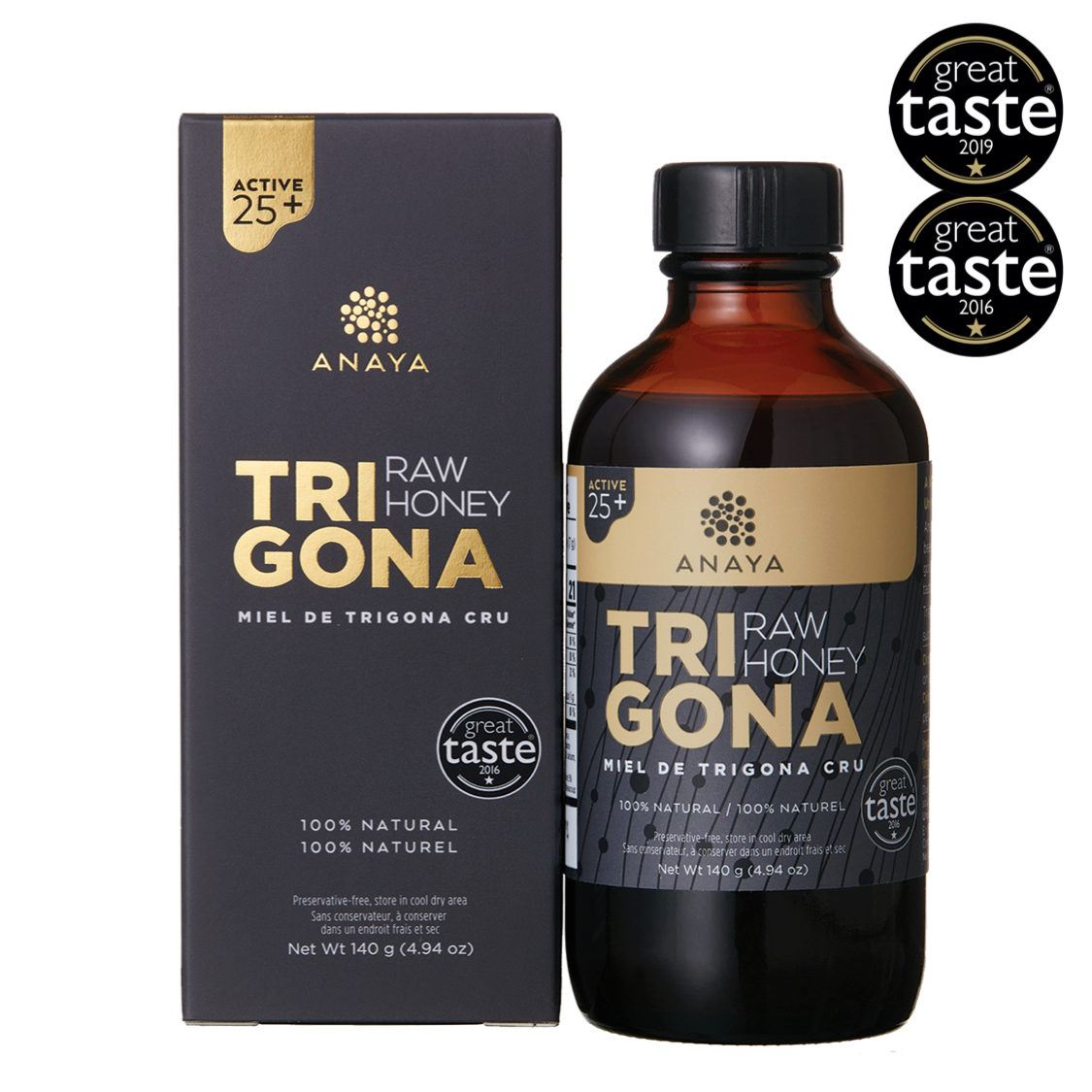




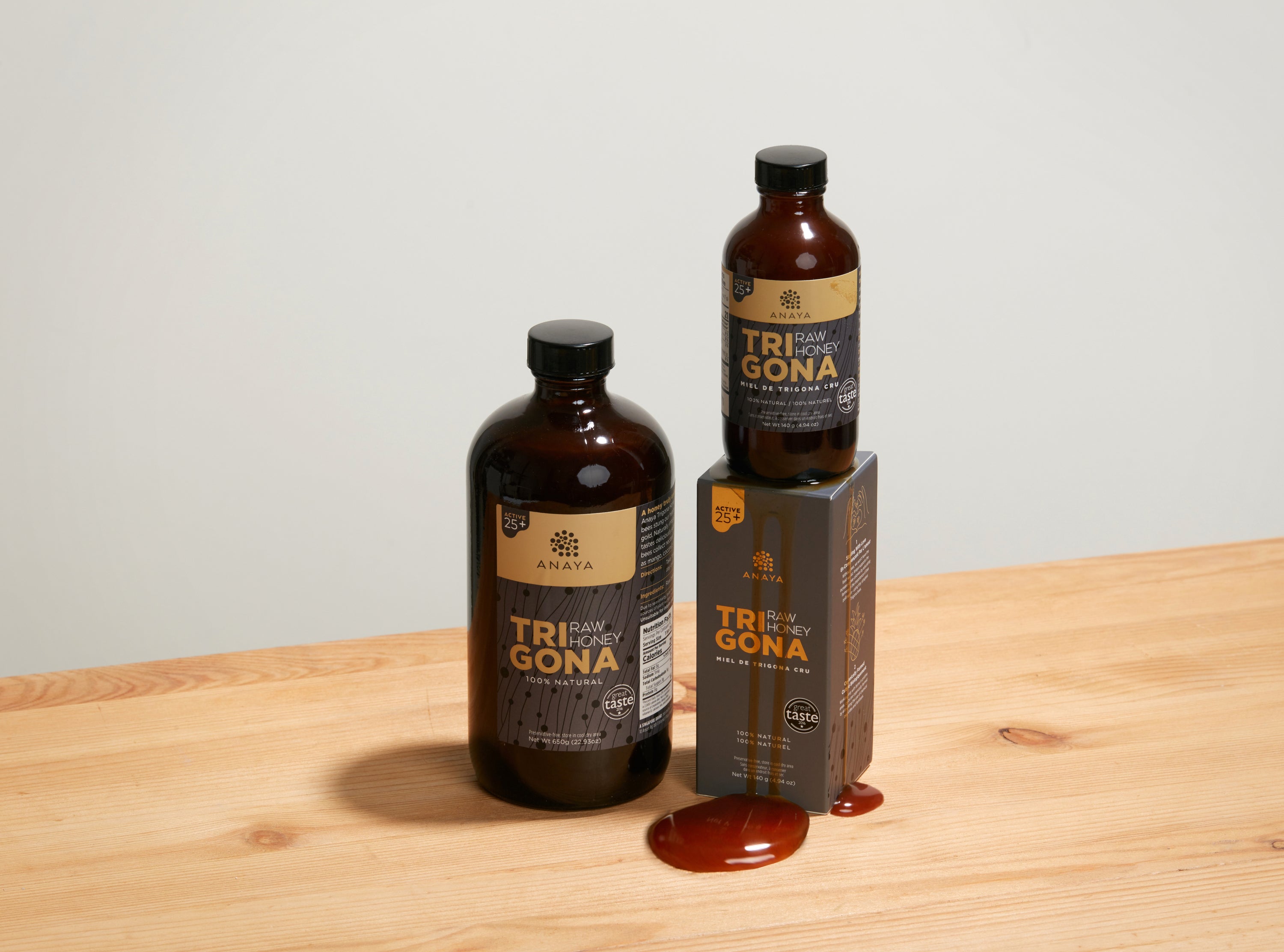


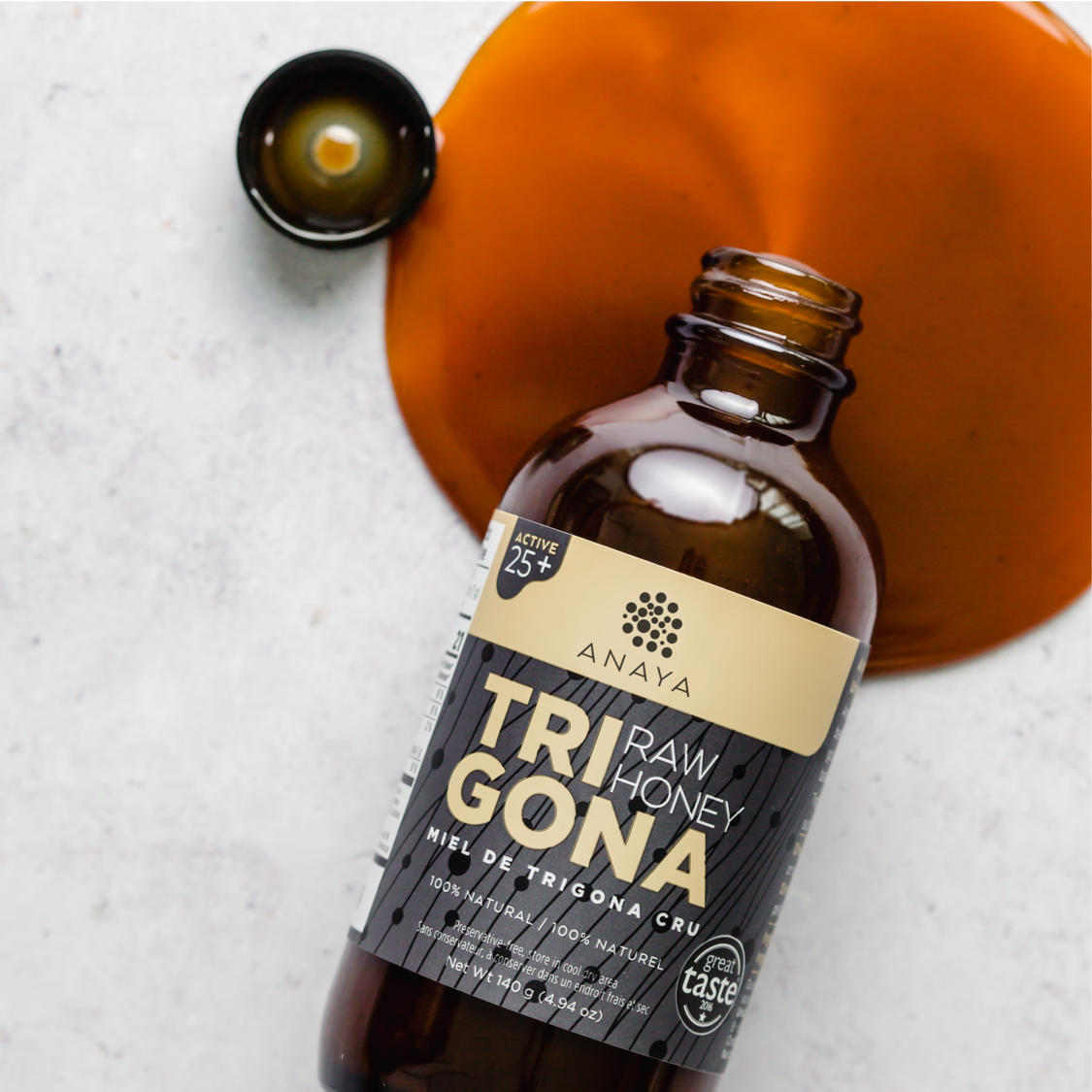




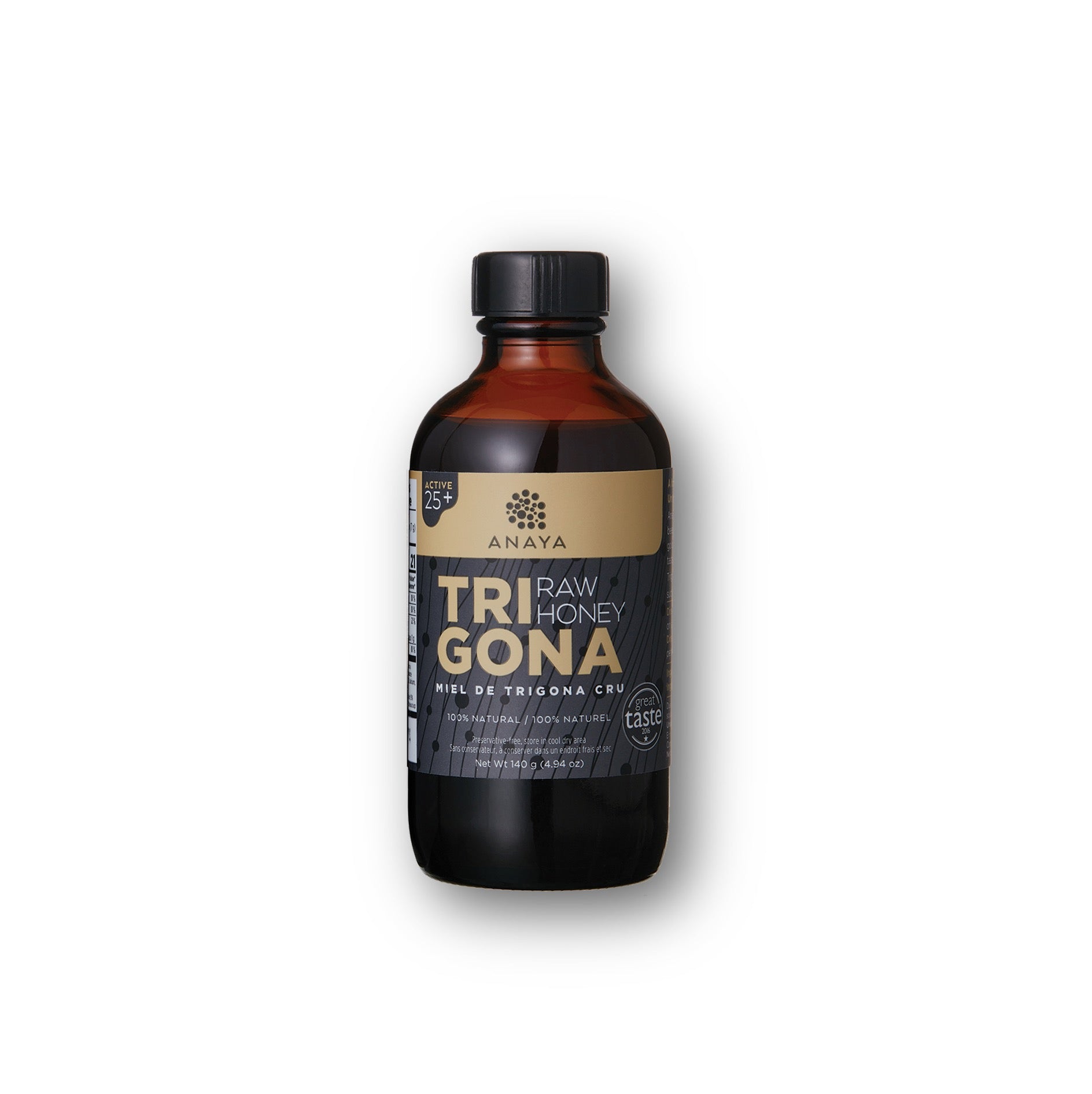






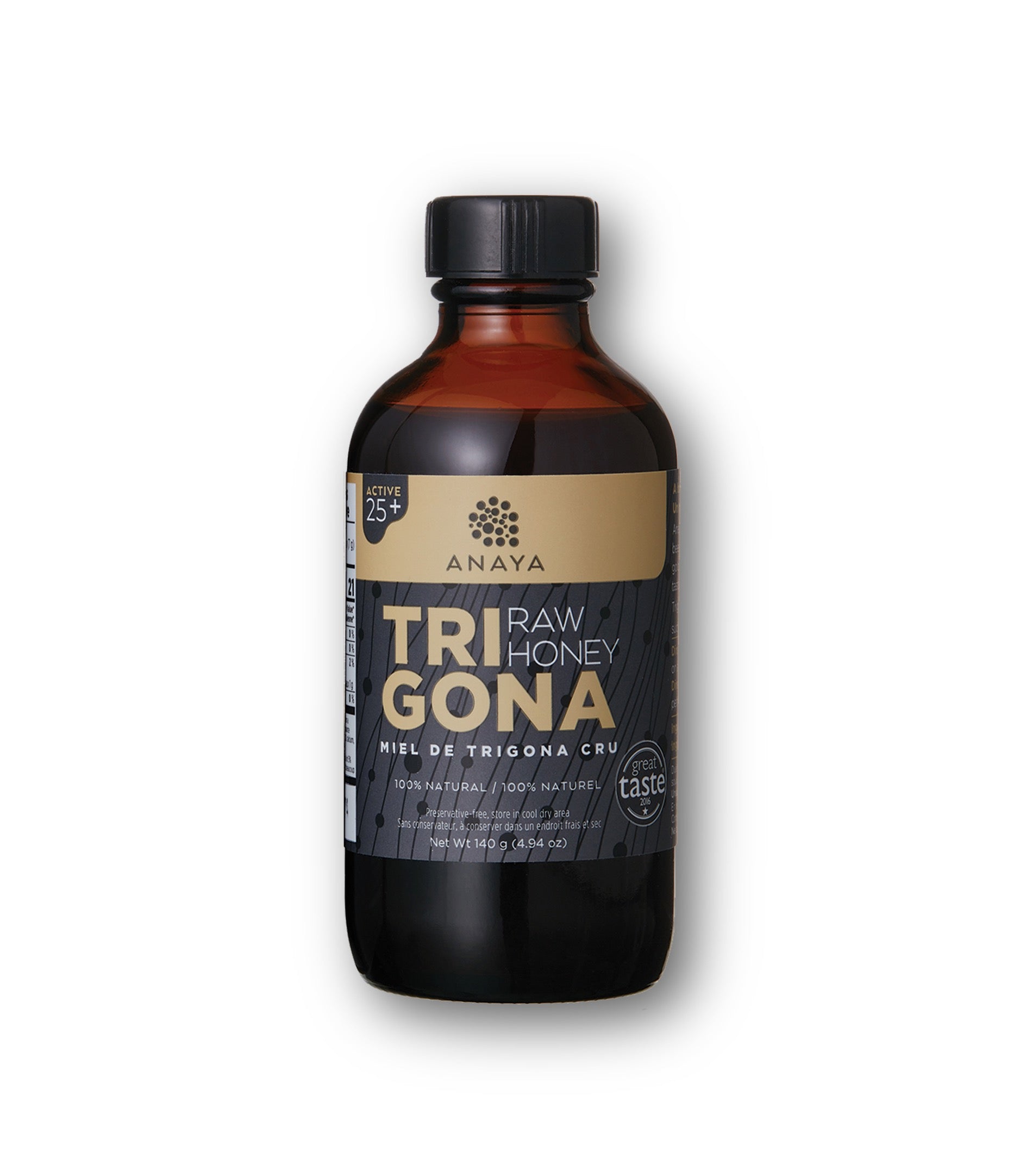


Raw Trigona Honey (Active 25+) 140g
Raw honey from Trigona biroi, a stingless bee found across Southeast Asia.
It tastes sour, and that surprises people the first time. It is meant to. Regular honey hides its acids behind sweetness. This one does not.
One hive produces roughly 500g a year. A European honeybee colony produces around 30kg. That scarcity is why most people have never tasted it.
- What it is
- Benefits
- Who it's for
- The details
- How to use
- FAQs
Raw, medicinal honey from stingless Trigona bees, independently tested at Active 25+ and lab tested at twice the potency of a UMF 26+ Manuka honey. It is unheated and unfiltered, naturally high in pollen and propolis, and carries phenolic compounds, probiotics and amino acids.
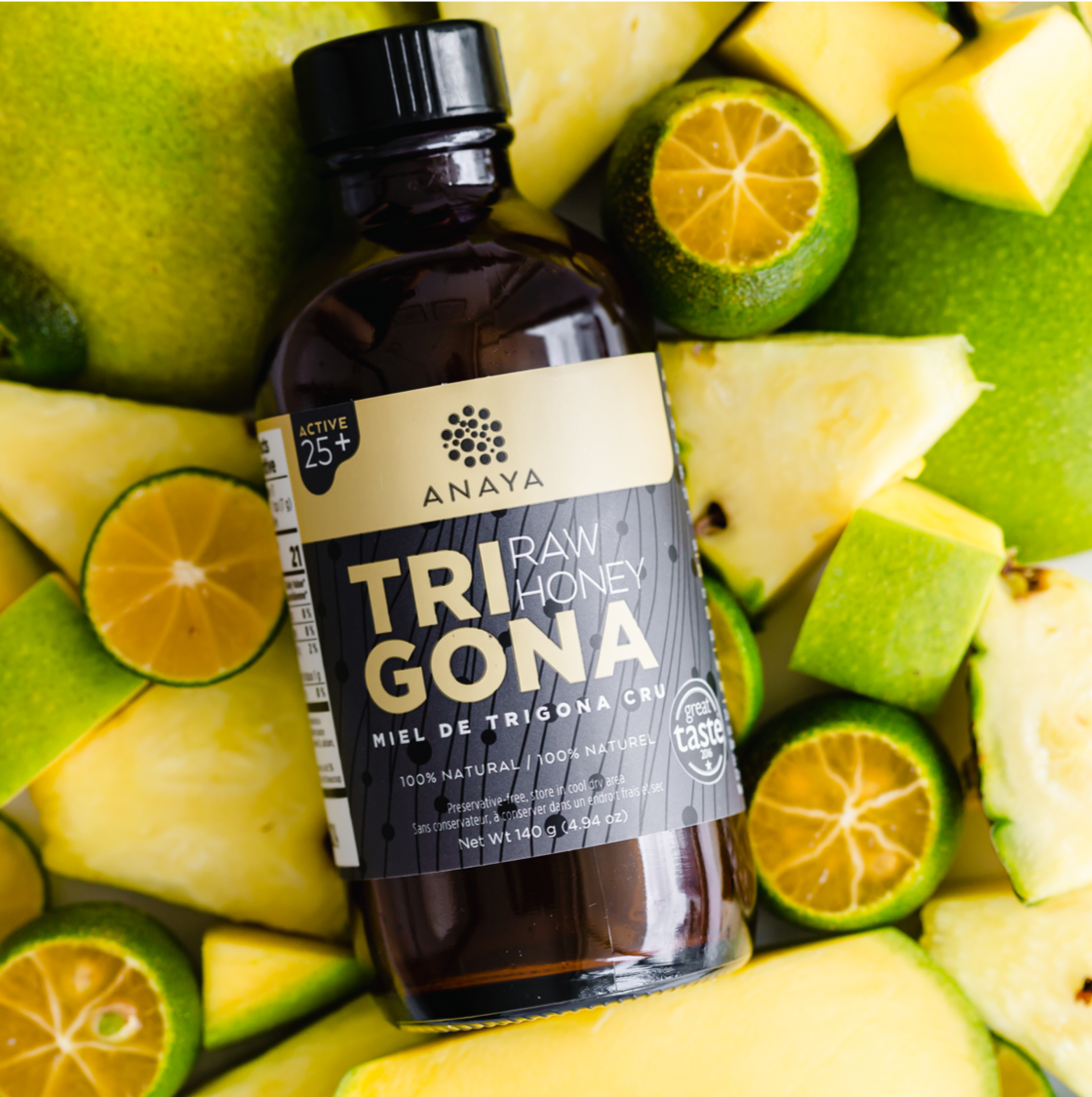
The bees are tiny enough to get into more flowers than regular honeybees. Ours forage on fruit farms in the Philippines, which gives the honey a citrussy sweet flavour rather than a floral one. Look for notes of mango, pineapple, tamarind, calamansi, coconut and lychee.
- Lab tested at twice the potency of a UMF 26+ Manuka honey
- Contains trehalulose, a sugar with roughly a third the glycaemic impact of table sugar
- Naturally contains propolis, pollen and amino acids
- Winner of the UK's Great Taste Award
- No pesticides, preservatives or additives
Families who want a honey that does more than sweeten, and a stronger immunity through the school year. Anyone watching their sugar who still wants something sweet on their toast or in their salad. Suitable from age one.
Ingredients: raw Trigona biroi honey. Nothing else. Contains pollen. Net weight 140g.
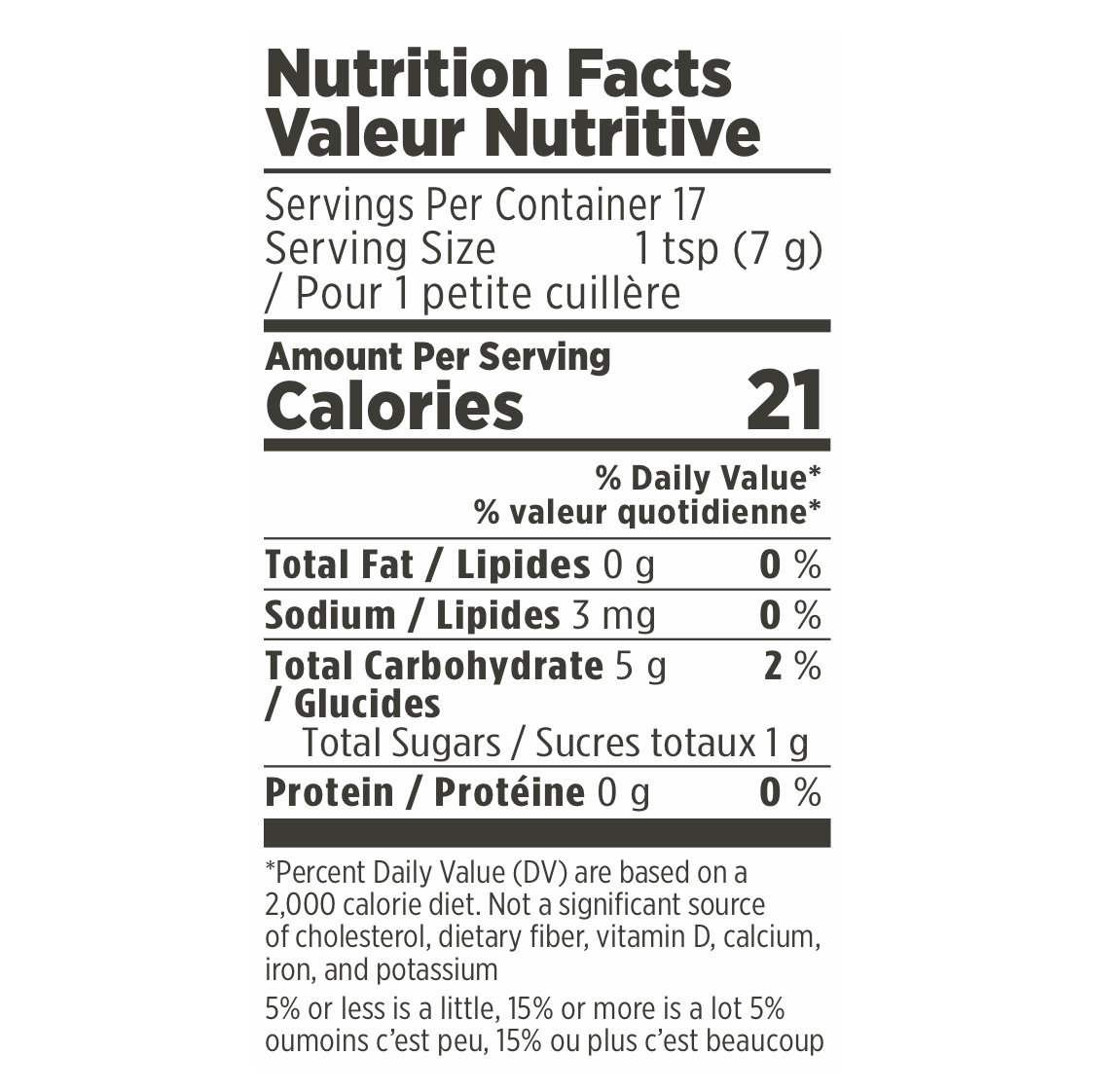
What matters in this honey is which sugars are in it, not how many. Trehalulose makes up 13% to 44% of the total sugars in stingless bee honey, depending on the species and where it comes from.
Awarded the UK's Great Taste Award, which has been called the Oscars of the food world. Free from pesticides, preservatives, additives or adulteration.
More on the chemistry in our complete guide to stingless bee honey.
Take a spoonful on alternate days. Double it when you feel under the weather.
Enjoy it on its own, or stirred into tea, yogurt, smoothies, pancakes, salad dressings and even cocktails. The sourness works especially well in dressings and marinades.
Keep it sealed, in a cupboard, away from light, and always use a dry spoon. It can also go in the fridge, where it tastes especially refreshing.
How is this different from Manuka?
Manuka comes from one plant. Ours comes from several fruit farms, so the flavour carries mango, tamarind, lychee and calamansi notes. It has been lab tested at twice the potency of a UMF 26+ Manuka, and it is rarer and naturally higher in propolis. We compare the two in What is Medicinal Honey?
Is it safe for children?
Yes, from one year old. Never give any honey to a baby under 12 months.
Why is it runnier than other honey?
Stingless bee honey naturally holds more moisture. It will not crystallise the way regular honey does. Why that is, here.
Why does it taste sour?
Its natural moisture, the nectar the bees feed on, and storage in propolis lined pots. It is a feature rather than a fault. We explain it in Why Does Trigona Honey Taste Sour?
Does it need refrigeration?
It doesn't have to be. If you keep it out of the fridge, keep it away from light and heat.
What it is
Raw, medicinal honey from stingless Trigona bees, independently tested at Active 25+ and lab tested at twice the potency of a UMF 26+ Manuka honey. It is unheated and unfiltered, naturally high in pollen and propolis, and carries phenolic compounds, probiotics and amino acids.
The bees are tiny enough to get into more flowers than regular honeybees. Ours forage on fruit farms in the Philippines, which gives the honey a citrussy sweet flavour rather than a floral one. Look for notes of mango, pineapple, tamarind, calamansi, coconut and lychee.
Benefits
- Lab tested at twice the potency of a UMF 26+ Manuka honey
- Contains trehalulose, a sugar with roughly a third the glycaemic impact of table sugar
- Naturally contains propolis, pollen and amino acids
- Winner of the UK's Great Taste Award
- No pesticides, preservatives or additives
Who it's for
Families who want a honey that does more than sweeten, and a stronger immunity through the school year. Anyone watching their sugar who still wants something sweet on their toast or in their salad. Suitable from age one.
The details
Ingredients: raw Trigona biroi honey. Nothing else. Contains pollen. Net weight 140g.
What matters in this honey is which sugars are in it, not how many. Trehalulose makes up 13% to 44% of the total sugars in stingless bee honey, depending on the species and where it comes from.
Awarded the UK's Great Taste Award, which has been called the Oscars of the food world. Free from pesticides, preservatives, additives or adulteration.
More on the chemistry in our complete guide to stingless bee honey.
How to use
Take a spoonful on alternate days. Double it when you feel under the weather.
Enjoy it on its own, or stirred into tea, yogurt, smoothies, pancakes, salad dressings and even cocktails. The sourness works especially well in dressings and marinades.
Keep it sealed, in a cupboard, away from light, and always use a dry spoon. It can also go in the fridge, where it tastes especially refreshing.
FAQs
How is this different from Manuka?
Manuka comes from one plant. Ours comes from several fruit farms, so the flavour carries mango, tamarind, lychee and calamansi notes. It has been lab tested at twice the potency of a UMF 26+ Manuka, and it is rarer and naturally higher in propolis. We compare the two in What is Medicinal Honey?
Is it safe for children?
Yes, from one year old. Never give any honey to a baby under 12 months.
Why is it runnier than other honey?
Stingless bee honey naturally holds more moisture. It will not crystallise the way regular honey does. Why that is, here.
Why does it taste sour?
Its natural moisture, the nectar the bees feed on, and storage in propolis lined pots. It is a feature rather than a fault. We explain it in Why Does Trigona Honey Taste Sour?
Does it need refrigeration?
It doesn't have to be. If you keep it out of the fridge, keep it away from light and heat.